Waldorf, Maryland
Appliance Removal in Waldorf, MD
Appliance Removal in Waldorf, Maryland, priced by volume against published market figures, with the price confirmed on site before loading begins.
Waldorf, Maryland
Appliance Removal in Waldorf, Maryland, priced by volume against published market figures, with the price confirmed on site before loading begins.
A dead refrigerator is a heavy box of sharp edges and bad timing. It will not go out the front door without a plan, it will not fit in the family car, and the replacement is already scheduled to arrive. Waldorf Junk Removal Company removes refrigerators, freezers, washers, dryers, ranges, and water heaters for households across Waldorf and Charles County, and every removal starts with the quote form on this page.
Appliance work is mostly logistics: weight, doorway widths, water lines, and the order things get disconnected in. A refrigerator that a delivery crew left in the garage still has to leave the property somehow, and a washer that died mid-cycle is holding a tub of water on the second floor. We handle both ends of that problem: the disconnect where it is safe to do so, the carry, and the haul into the recycling and disposal streams that take these machines.
Refrigerators and freezers lead the list: French door and side by side units, chest freezers, garage second fridges that stopped being worth the electricity. Washers and dryers follow, top load and front load, gas and electric. Then ranges and ovens, dishwashers, and water heaters, which are heavier than they look once the sediment of a decade is counted.
Remodel kitchens across Waldorf generate full suites at once, and we clear those as single loads: the old refrigerator, range, dishwasher, and microwave out together, ahead of the new install. Rental turnovers and estate clearings produce the same pattern in ones and twos. Single appliances are just as ordinary: one dead dryer, one freezer, one water heater that started leaking into its pan.
Appliances come out in an order, and the order matters. Water lines get shut off before they get disconnected. A washer's tub gets drained before the machine tips. Refrigerator doors come off when the doorway demands it, which in older Waldorf homes is often, and a freezer's contents problem gets discussed before the plug comes out, not after.
If an appliance is plugged and plumbed with standard hookups, we disconnect it as part of the removal. If a unit is hardwired, or a line needs more than a shutoff and a standard disconnect, we will tell you plainly what has to happen before it can move, because that work belongs to the trades that handle those lines. On the way out, floors and door frames get protected, the machine travels on a dolly where the path allows, and the space it occupied is left empty and wiped down.
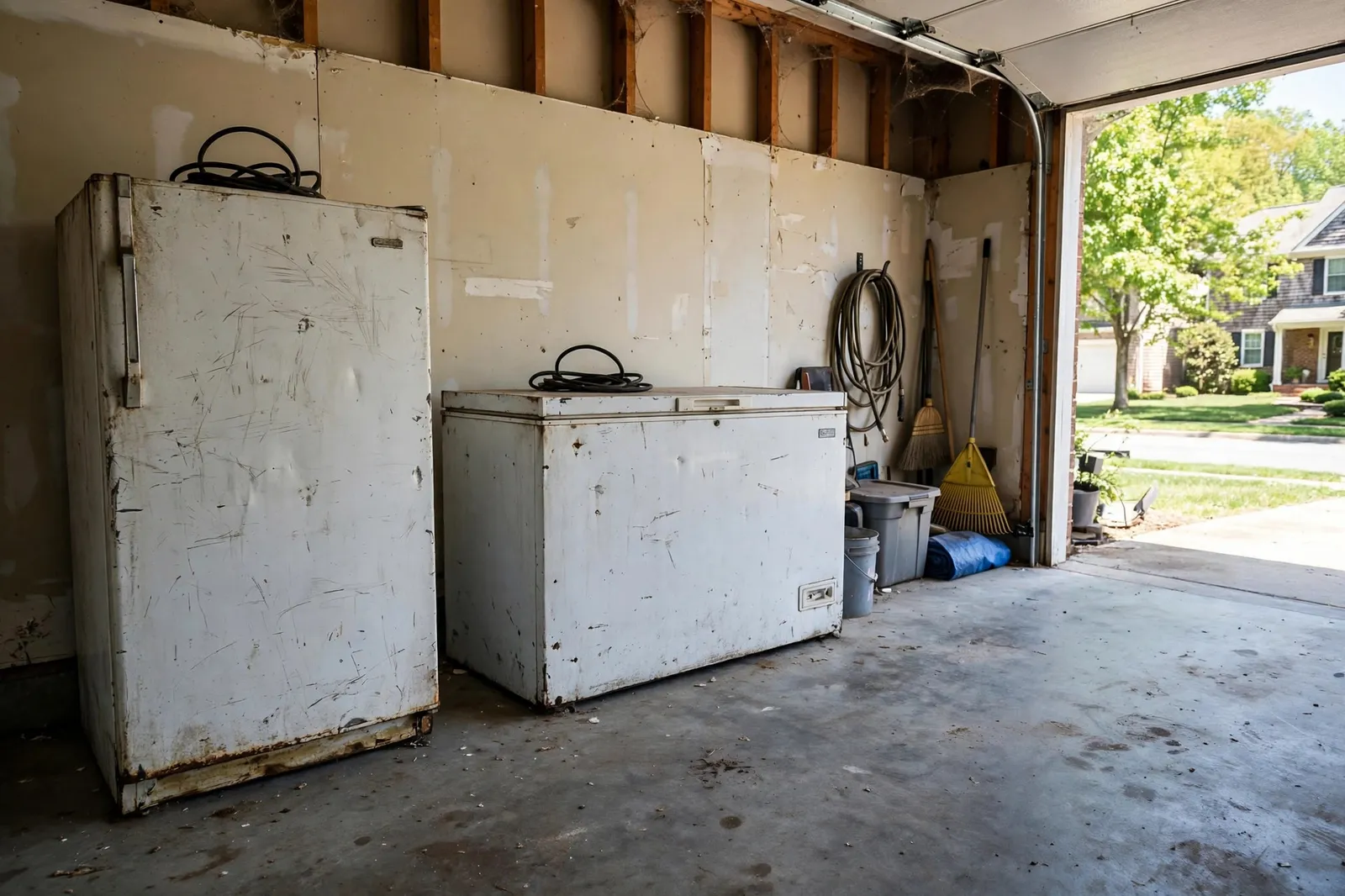
A Bannister kitchen refresh left a refrigerator in the garage and a washer and dryer pair in the laundry room needing to go before the new units arrived. We drained and disconnected the washer, took the refrigerator doors off to clear the side door, protected the floors on both carry paths, and hauled all three machines in one load.
Appliance pricing follows the published load structure of the trade. One Waldorf operator publishes pickup loads starting at $100, and regional operators publish minimums around $125, with about $265 for a quarter load and about $695 for a full load. A single appliance on the ground floor sits near that published minimum scale. A refrigerator plus a laundry pair builds by volume toward the quarter load range, and a full remodel suite clears as a larger share of a load.
Weight plays a part at the margins: appliances route into recycling and disposal streams that handle them by type, and the handling rides inside the figure rather than appearing as a surprise afterward. Describe the machines in the quote form: what they are, where they sit in the house, and whether they are still connected. We respond with the load size your description suggests and the published market range for that volume, and the figure is confirmed once we see the appliances themselves.
The case against moving your own refrigerator is arithmetic: the machine weighs more than the two people usually recruited to move it, its center of weight sits high, and the route out involves stairs, a doorway narrower than the machine is deep, and a vehicle it will not fit into standing up. Lying a refrigerator down for transport creates its own problems, and a unit dropped on a stair turn damages the stairs, the machine, and occasionally the people.
Disposal is the second half of the problem. Appliances are not curbside trash in most of Waldorf; they route into recycling and disposal streams that accept them by type, at facilities with their own schedules. A removal visit closes both halves at once: disconnected in the right order, carried on equipment made for the weight, protected floors on the way out, and the machines gone into the right stream when the truck leaves.
A single ground floor appliance prices near the published minimum scale: local pickup loads are published as starting at $100 by one Waldorf operator, and regional minimums run around $125. A refrigerator plus a laundry pair builds toward the quarter load figure published regionally at about $265, and full remodel suites price as a larger share of a load. The figure is confirmed once we see the machines.
Standard hookups are part of the removal: water lines shut off and disconnected, plugs pulled, a washer drained before it moves. If a unit is hardwired or a line needs work beyond a standard disconnect, we will tell you plainly what has to happen first, since that work belongs to the trades that handle those lines. Mention the hookup type in your message if you know it.
Yes. Remodels generate suites, and they clear as a single load: refrigerator, range, dishwasher, and microwave together, with any laundry machines added. One visit empties the kitchen ahead of the new install, and the suite prices by the volume it occupies rather than piece by piece.
Appliances route into the recycling and disposal streams that accept them by type: metal recovery for the cabinets and shells, and the handling each machine type requires at the receiving facility. Usable machines in working order can go toward donation where a receiving organization will take them. If a machine still runs and you would rather it be passed on, say so in your message.
No. Doors come off as part of the job whenever a doorway or a turn requires it, which is common in older homes, and go back on before the machine loads. You do not need to empty the refrigerator for the doors to come off, though anything you want to keep should come out before we arrive, since a disconnected refrigerator warms quickly.
The form asks for your name, phone number, the service you need, and a short message. Name the appliances, their floor, and whether they are connected, and we respond with the load size the description suggests and the published market range for that volume. Asking carries no obligation, and the form is the only contact path this site uses.
Tell us what is going and roughly how much of it there is. We read every request that comes in and respond with the load size your description suggests and the published market range for that volume, and the price is confirmed by volume once the crew sees the actual load.
Prefer to talk it through first? Send the form and we will call you back at the number you give us.