Waldorf, Maryland
Construction Debris Removal in Waldorf, MD
Construction Debris Removal in Waldorf, Maryland, priced by volume against published market figures, with the price confirmed on site before loading begins.
Waldorf, Maryland
Construction Debris Removal in Waldorf, Maryland, priced by volume against published market figures, with the price confirmed on site before loading begins.
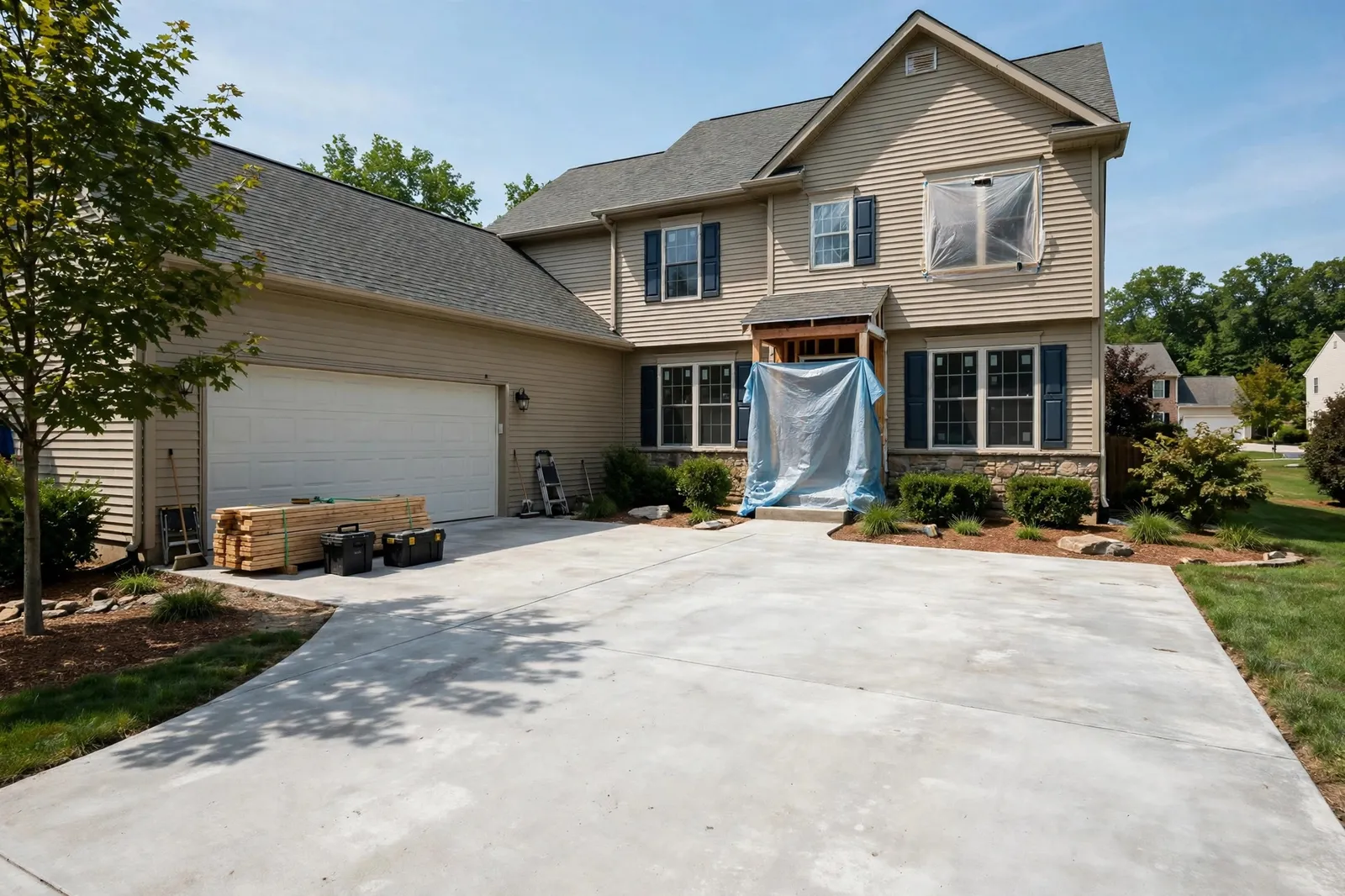
A remodel makes debris faster than it makes progress. By the second week of a Waldorf kitchen job there is a driveway pile of cabinets and countertop, drywall stacked where a car used to park, and flooring offcuts migrating across the garage floor. Waldorf Junk Removal Company hauls construction debris from remodels and job sites across Waldorf and Charles County, loading it from where it sits, and every job starts with the quote form on this page.
Contractors and homeowners use this service for the same reason: debris that stays on site slows the work in front of it. A pile in the driveway blocks deliveries, a garage full of offcuts blocks the next trade, and a dumpster is not always an answer when the driveway is short, the street is narrow, or the job is too far along to justify one. We load the pile, sweep where it sat, and the site is workable again.
Demolition and remodel debris is the core of it: drywall and plaster, lumber offcuts and framing scrap, cabinets and countertops, tile and backer board, hardwood, laminate, and vinyl flooring, roofing shingles and felt, doors and trim, bathtubs and vanities, and the packaging mountain every material delivery leaves behind. We haul from whole house renovations down to a single bathroom gut.
We load from where the debris sits rather than from where a container would fit: the driveway pile, the garage corner, the backyard stack, the room under renovation once it is safe to work in. What we do not haul is hazardous material. Older homes can hold asbestos containing material in tile, insulation, and siding, and that sits outside this service entirely; if a pile looks like it contains suspect material, we will say so and leave it for the channels that handle it.
Household junk prices mostly by volume. Debris prices by volume and weight together, because dense material changes the math: a truck bed of broken tile or drywall weighs several times what the same space of furniture weighs, and disposal at the Charles County landfill is charged by weight. Shingles, concrete chunks, and wet plaster sit at the heavy end; lumber, cabinets, and packaging sit at the light end.
That is why a debris figure cannot be honest until the pile is seen. Two piles that look the same size can carry very different weight, and the scale settles which. The quote form starts the estimate from your description, and the final figure is confirmed once we see the actual pile, its materials, and how it will load. A quote that never mentions disposal weight has not shown you its whole math, whoever gives it.
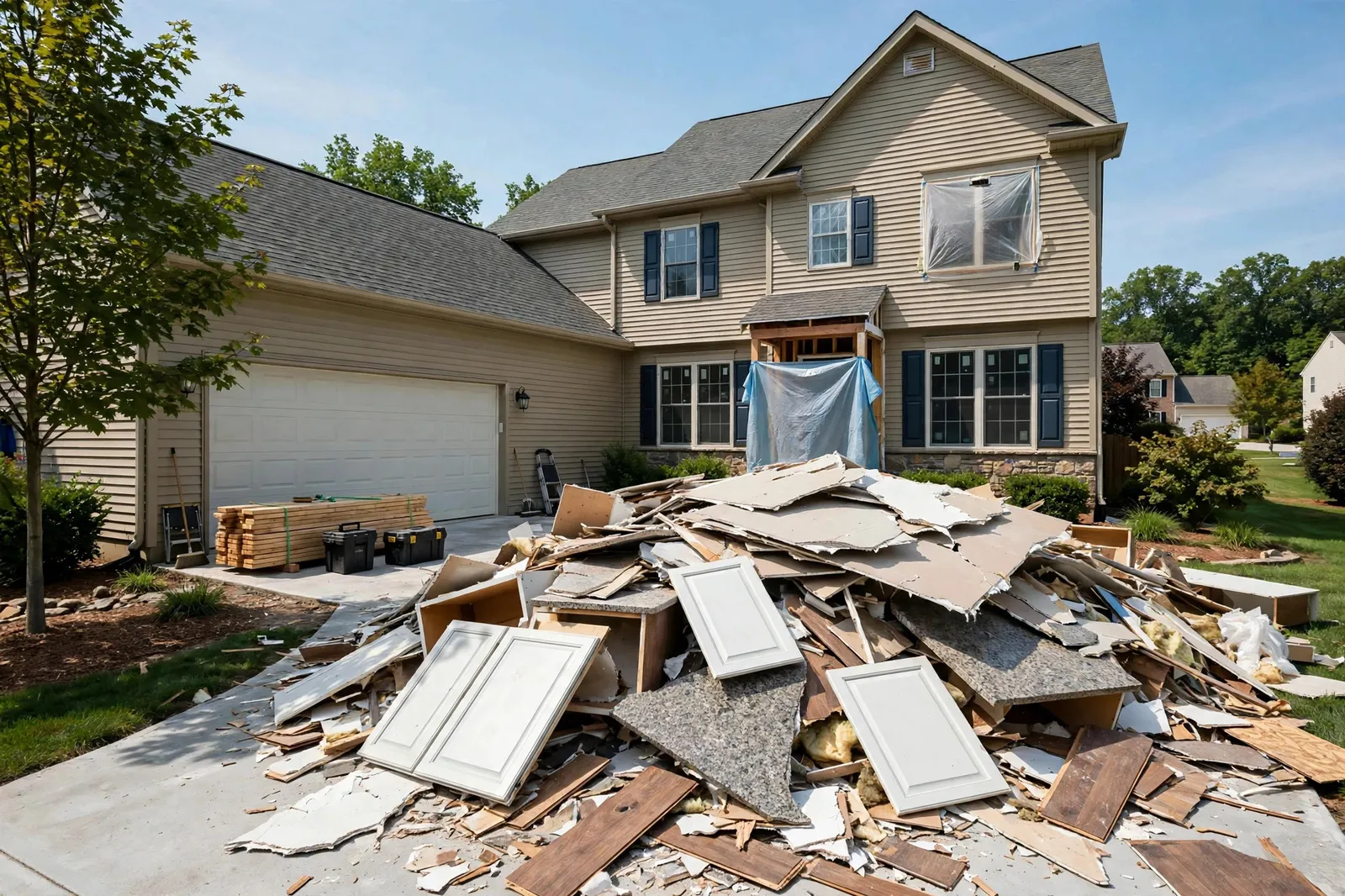
A Wakefield kitchen and bathroom remodel had produced a combined pile that outgrew the driveway corner it started in: cabinets and countertop sections, drywall and backer board, tile, and flooring stacked across the drive and into the garage. We loaded the full pile by hand, kept the heavy tile and drywall low in the load, and swept the driveway section it had occupied for two weeks.
Debris follows the same published load structure as the rest of this trade, with weight factored in. One Waldorf operator publishes pickup loads starting at $100. Regional operators publish minimums around $125, about $265 for a quarter load, and about $695 for a full load. A single bathroom's worth of debris sits near the small end. A full kitchen gut, dense with tile and drywall, lands mid structure or higher, because the scale at disposal adds what the eye cannot see.
Material decides where in that structure a job falls. A load of cabinets and lumber prices by its volume. A load of shingles or broken concrete prices by volume and weight both, and the same sized pile costs more to put into the ground. Describe your pile in the quote form: what materials are in it, roughly how large it is, and where it sits. We respond with the load size your description suggests and the published market range for that volume, and the figure is confirmed once we see the pile itself.
A dumpster rents you a steel box. You load it, on your schedule, with your labor, and it sits in the driveway until the pickup comes, which on a tight Waldorf lot can mean days of blocked parking and, on some streets, questions you would rather not answer. The dumpster wins for slow, steady projects where debris generates a little at a time and someone on site is happy to carry it out.
Full service removal brings the labor with the truck. We carry the debris from where it sits, including up basement stairs and out of backyards a container could never reach, load it, and sweep the ground it covered. For a finished remodel's final pile, a demolition day that produces everything at once, or debris stacked somewhere a box cannot go, the loaded truck is usually the simpler total once your own hours and trips are counted honestly.
It follows the published load structure: local pickup loads start at $100 from one Waldorf operator, regional minimums run around $125, a quarter load is published at about $265, and a full load at about $695, with weight factored in for dense material. A small bathroom pile prices at the low end; a full kitchen gut with tile and drywall lands higher. The figure is confirmed once we see the actual pile.
Drywall, lumber, cabinets, countertops, tile, flooring, roofing shingles, doors, trim, tubs, vanities, and packaging from remodels and small builds. If it came out of a house and it is non hazardous, it is fair game. Mixed piles are normal and load as they are; you do not need to separate materials before we arrive.
Anything hazardous. The main one in older Waldorf homes is asbestos containing material, which can appear in old floor tile, insulation, and siding, and which belongs with abatement channels rather than a junk truck. Liquid paint, solvents, and chemicals are likewise outside this service and go to the county household hazardous waste program.
We load it. Debris is carried from where it sits: the driveway, the garage, the backyard, or the room it came out of. You do not need to move it to the curb or rent anything to put it in. Keeping the carry path reasonably clear helps, and that is the whole of the preparation.
Yes, once the area is safe to walk and work in. Interior piles from a gut or a demolition day load the same way exterior piles do, with floors and door frames protected on the carry path. Mention in your message where the debris sits inside the home so the plan accounts for stairs and tight turns.
The form asks for your name, phone number, the service you need, and a short message. Describe the pile: its materials, its rough size, and where it sits. We respond with the load size the description suggests and the published market range for that volume. The form is the only contact path this site uses, and asking carries no obligation.
Tell us what is going and roughly how much of it there is. We read every request that comes in and respond with the load size your description suggests and the published market range for that volume, and the price is confirmed by volume once the crew sees the actual load.
Prefer to talk it through first? Send the form and we will call you back at the number you give us.